
Description
Common name: Weddel Palm, Miniature Coconut Palm, Dwarf Cocos Palm, Wedding Palm
Brazil – São Paulo, on the Atlantic plateau. In southern Brazil, L. weddellianum is found on Brazil’s southeastern coast where development has also caused it to become endangered. It grows in rain forest to 800 m in elevation; This palm originates in South America, though the exact location is unknown. It grows naturally in the rainforests of Brazil. It is a medium altitude palm, growing in altitudes of 50–800 m (160–2,600 ft). It thrives in the humid shade of the Brazilian rainforests. Originally, the palm was placed in the same species as the coconut palm, under the name Cocos weddelliana, before moving to the queen palm genus, Syagrus, and finally moving to its own genus, Lytocaryum.
Description
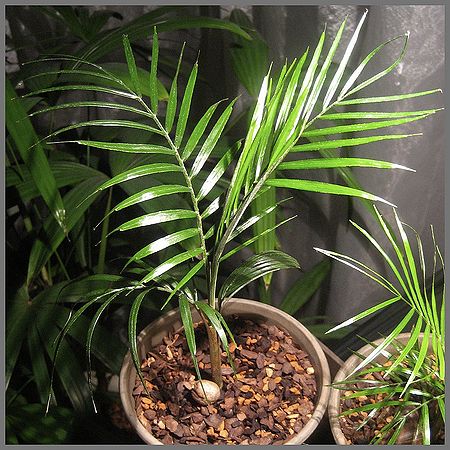
Solitary, pinnate palm. Height up to 3.0m. The palm has a small stature, in rare cases, this palm can grow to 10 feet, with a trunk reaching a diameter of about 2″. The leaves can eventually become about 90cm (35 inch) long and 22cm (9 inch) wide, the shiny, dark green fronds, which are divided into many pinnae (or leaflets) spread out from a very short thickened base. Each frond, carries on a petiole 20-30cm (8-12 inches) long, has a rachis covered with black scales. There are 20 to 30 slender pinnae on each side of the rachis 12 cm long, and these are evenly arranged – though not quite opposite one another – in herringbone fashion.. After flowering, it produces small edible fruits that resemble and taste like coconuts. Editing by edric.
Culture
Closely related to the coconut palm, but is much smaller and more cold tolerant, taking down to about 25 °F (−4 °C). This palm can be successfully grown in hardiness zone 9b. This palm should be grown in well draining soil that is constantly moist, but not soggy, as this can lead to lethal root rot. restricted to filtered light and humus-rich soil. Water moderately at all times, giving enough to make the mixture moist, allowing the top centimetre (0.4 inch) or so to dry out before watering again. When temperatures fall below 15°C (59°F), allow the top 2-3 cm (0.8-1 inch) of mixture to dry out between waterings.
Houseplant care: Lytocaryum weddellianum will live for many years, especially if it is kept in a well-lit position. It is an easy to care palm.
Remove any damaged or withered fronds with sharp scissors. An inevitable problem encountered when growing palms indoors is the dust that builds up on the leaves over time that may restrict the amount of light that gets through to the plant. Avoid to use chemicals to shine the palm leaves. The best way to refresh the palm is to wipe the leaves down with damp sponge or stand it outside during a summer shower.
Light: Give these palms bright light, but without any direct sunlight.
Temperature: Lytocaryum weddellianum do well in temperatures between 15 and 27°C (59-81°F). They should not be exposed for long periods to temperatures below or above that range. They are extremely sensitive to dry air, which will cause the fronds to turn brown and shrivel. Stand the potted plants on trays of moist pebbles throughout the year.
Watering: Water moderately at all times, giving enough to make the mixture moist, allowing the top centimetre (0.4 inch) or so to dry out before watering again. When temperatures fall below 15°C (59°F), allow the top 2-3cm (0.8-1 inch) of mixture to dry out between waterings.
Lytocaryum weddellianum does not tolerate drought.
Fertilising: Apply standard liquid fertiliser about once a month throughout the active growth period.
Potting and repotting: Use a soil based potting mixture. It is vitally important not to give these palms larger pots than they actually require. Repotting becomes necessary only when the thickened base of Lytocaryum weddellianum begin to force its way up out of the pot. This will not happen more often than once every two or three years. Repot this palm in spring.
Older plants should not be repotted, but top-dressed once a year in spring.
Garden Culture: The Lytocaryum weddellianum cannot withstand full sun and needs to be protected by taller growing plants.
Propagation: Lytocaryum weddellianum are propagated from seed. This is an extremely slow process and is therefore not recommended for amateur growers. Usually Lytocaryum weddellianum is available throughout the year from garden centres and nurseries.
Delivery: With in one day
Any questions, feel free contact us: